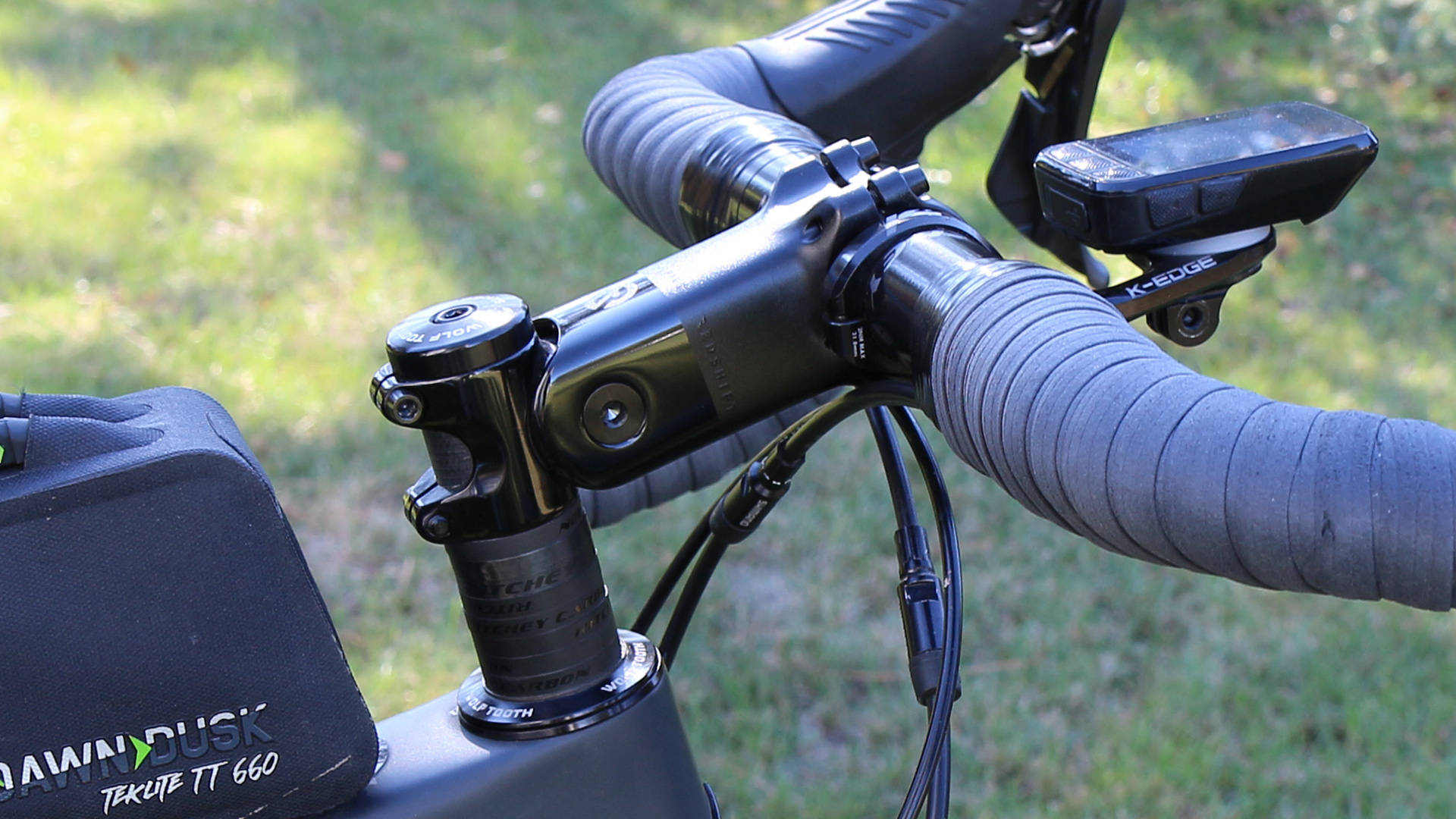
After a few seasons of gravel adventures—including some punishing Northern Michigan two-tracks that feel more like mountain bike trails—I decided to try the Redshift ShockStop PRO Suspension Stem on my Otso Waheela C. I wanted something that could soften the impact on my hands and add a bit more control.
1,500 Miles of Real-World Testing
That was back in January 2025. Since then, I've put close to 1,500 miles on this stem, and it's become one of those upgrades I didn't know I needed until I had it.
What This Stem Is (And What It Isn’t)
Let's get this straight right up front: this is not a suspension fork. It won't give you the plush, big-hit absorption of actual suspension. If you're expecting to bomb down gnarly singletrack like you're on a mountain bike, you're going to be disappointed.
But here's the reality for most of us—the vast majority of gravel bikes aren't suspension fork compatible anyway. And even if yours is, do you really want the weight, maintenance, and expense of a suspension fork for the riding most gravel cyclists actually do?
The ShockStop PRO fills a sweet spot: it takes the harsh edge off the constant chatter and vibration that define gravel riding. It's not sexy, it's not going to make you faster, but after three or four hours in the saddle on washboard gravel roads, your hands will thank you.
Dialing It In: The Elastomer System
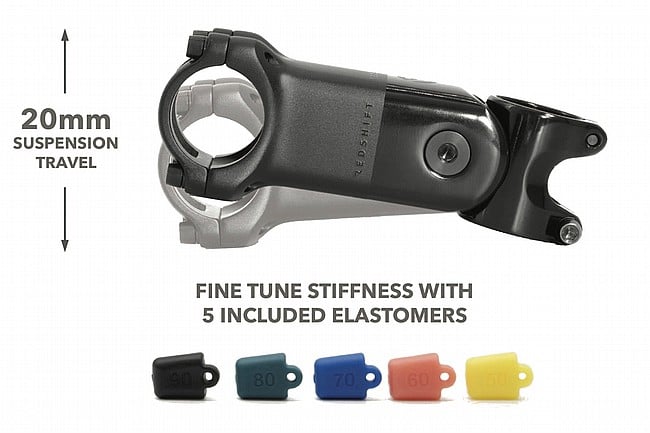
One of the smartest things Redshift did with this stem is make it adjustable. The stem comes with five elastomers in varying densities (ranging from 60 to 90 on their hardness scale), and you can mix and match them to fine-tune the suspension's behavior.
The system uses two elastomers working together, and by swapping them out, you can create a wide range of stiffness options. Redshift includes a chart that recommends combinations based on your weight and riding style—whether you want a softer, more compliant feel or a firmer, more responsive setup.
Here's the practical reality: I fall within the weight range Redshift sets for the stem out of the box, so I installed it and just started riding. It worked perfectly for me right away. But if you're lighter or heavier, or if you have strong preferences about how much cushion you want, the adjustability is here.
Changing elastomers requires removing the stem's faceplate (the part that clamps your handlebars). Redshift includes a special wrench tool to make this easier—it's a nice touch that shows they've thought through the user experience. The process isn't complicated, but you do need to follow the instructions to avoid damaging anything.
I've experimented with a couple of different elastomer combinations to see how they affect the ride. Softer settings give you more plush absorption but can feel a bit more active when climbing out of the saddle. Firmer settings feel more efficient but don't absorb quite as much chatter. For my weight (around 175-180 pounds) and riding style, the middle-range setup has been the sweet spot. It's not a one-size-fits-all solution—it's a system you can actually customize to work for you.
Real-World Performance: Barry Roubaix and Beyond
I've used this stem on everything from 3+ hour training rides to racing Barry Roubaix (if you've ridden Barry, you know precisely the kind of punishment I'm talking about). The stem consistently delivered on its core promise: reducing hand fatigue and helping me maintain better control on rough surfaces.
For a more clinical test of its capabilities, I took it on one of my regular mixed-surface routes here in Northern Michigan—a little over 10 miles with 1,200 feet of climbing. The route includes 4 miles of gravel and mountain bike singletrack, with the rest a mix of rural tarmac, city streets, and rough concrete. It's the kind of varied terrain that reveals what a product can actually do.
The Singletrack Test
The route includes a 3/4 mile twisting downhill section that's moderately technical on a mountain bike and legitimately challenging on a gravel bike. There are a couple of drop-offs where you really feel the stem compress and absorb impact. It's not like a suspension fork, but it's noticeably smoother than a rigid stem. On rough, off-camber corners where you're already on the edge of traction, that extra bit of control matters.
Urban Punishment
The urban section of my test route is where things get interesting. There's a series of speed bumps on a slight downhill with a curve that I hit at 20+ mph (because why not, eh?) that really challenge the stem's range of travel. With a rigid stem, those hits would jar your arms and make you think twice about your life choices. With the ShockStop PRO, the stem compresses, takes the edge off, and you roll through with better control.
Same story with the rough city streets—broken pavement, potholes, expansion joints. All that urban roughness that makes you wish you were back on smooth gravel gets noticeably more manageable.
Climbing: The Efficiency Question
Here's what matters to a lot of cyclists: does it rob you of power when you're climbing? I've got two separate one-mile paved climbs on this route, both averaging 7-8% grade. I've climbed them dozens of times with this stem, and I've never noticed any twist, flex, or loss of efficiency.
If there's any power loss happening, it's so minimal that I can't detect it—and trust me, when you're grinding up a 7% grade, you notice things that rob your power.
Installation and Maintenance (Or Lack Thereof)
Installation was straightforward. No special tools, no complicated procedures. What's impressed me more is the maintenance—or rather, the complete absence of required maintenance over 1,500 miles. I haven't done anything to this stem except occasionally wipe off road grime. It just works. In an era where so many components demand constant attention, that reliability is refreshing.
What It Costs and Where to Get It
The ShockStop PRO isn't cheap—it's a premium product with a premium price tag. But considering what you'd pay for a suspension fork (if your bike could even accept one), and factoring in the installation complications and ongoing maintenance that forks require, the value proposition makes sense for serious gravel riders.
You can find the Redshift ShockStop PRO Suspension Stem through most major online cycling retailers and many local bike shops.
Check Price at Bike Tires Direct
Standard vs. PRO: What You’re Actually Paying For
Redshift makes two versions of the ShockStop Suspension Stem: the standard version and the PRO version that I've been testing. Let me be straight with you about the differences, because this is essential information if you're deciding which one to buy.
The bottom line up front: Both stems deliver identical suspension performance—same 20mm of travel, same elastomer system, same core functionality. The differences are purely about weight and aesthetics.
Here's what the PRO version gets you:
- Weight savings: The PRO is approximately 15% lighter than the standard version—about 30-35 grams depending on stem length. Redshift achieves this through additional CNC machining that removes material where it's not structurally necessary.
- Titanium hardware: All the bolts on the PRO are titanium instead of steel. This contributes to the weight savings and gives a more premium appearance.
- Refined finish: The PRO features a "blacked out " finish with more refined machining. It looks more polished and integrated with modern bikes. The standard version is perfectly functional, more utilitarian in appearance.
- The price difference: The PRO costs about $60 more than the standard ShockStop.
My take: If you're a weight weenie (and I get it—I spent years racing and counting grams), the PRO makes sense. If you value the sleeker appearance and don't mind paying extra, go for the PRO. But suppose you're primarily interested in the suspension performance and want to save some money. In that case, the standard version will do exactly the same job on the trail.
I chose the PRO because I value both the weight savings and the cleaner appearance on my Otso. But I'll be honest—if the budget were tighter, I'd have been just as happy with the standard version's performance. You're not buying better suspension with the PRO; you're buying lighter weight and nicer looks.
Who Should Buy This
You'll love this stem if:
- You're putting in serious gravel miles (100+ miles per week)
- You ride rough terrain regularly (chunky gravel, washboard roads, light singletrack)
- Hand fatigue is limiting your ride length or enjoyment
- Your bike isn't suspension fork compatible (most aren't)
- You want a low-maintenance solution that works
Skip it if:
- You ride mostly smooth pavement
- You're looking for full suspension performance
- You rarely ride more than an hour at a time
- Budget is your primary concern
The Bottom Line
After 1,500 miles of testing across every condition Northern Michigan can throw at it—from spring mud to summer dust to fall's perfect gravel—I'm extremely happy with the Redshift ShockStop PRO Suspension Stem. It does exactly what it promises: takes the harsh edge off gravel riding without sacrificing climbing efficiency or requiring constant maintenance.
Is it a game-changer? That depends on your goals and expectations. For me, it's been a worthwhile upgrade that has made long gravel rides noticeably more comfortable and enjoyable. For riders logging serious miles on rough surfaces, that's worth the investment.