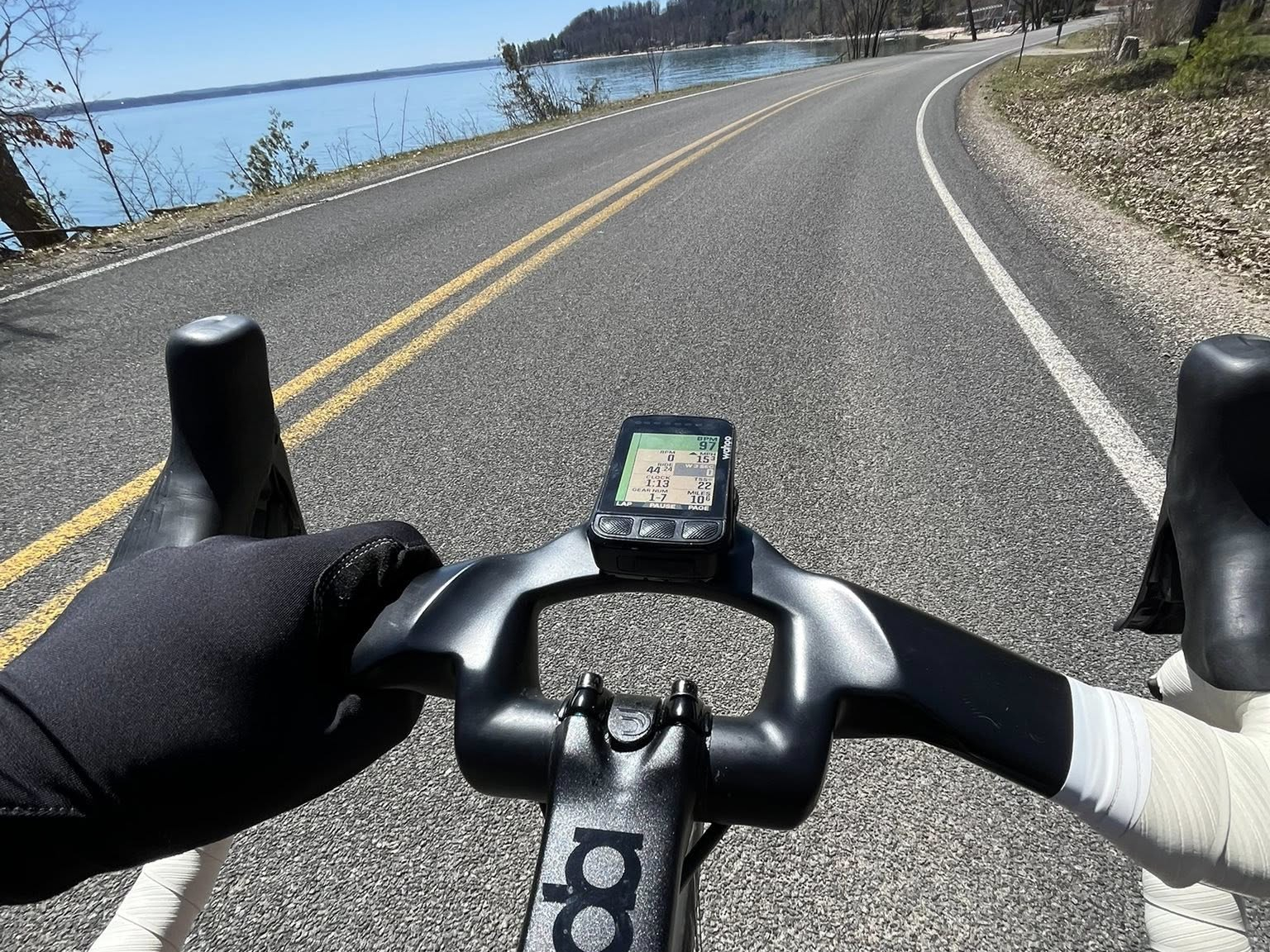
How a GPS watch, a body composition scale, and a training platform work together to give aging endurance athletes the complete picture — and why, after cancer treatment, that picture matters more than I ever expected
Building a Connected Fitness Monitoring System: GPS Watch, Body Composition Scale, and Training Platform Explained
At some point in your athletic life — maybe after an injury, a health scare, or simply the accumulating evidence of getting older — you realize that tracking miles and pace is no longer enough. Your body is telling a more complex story than any single number can capture. What you need is a system: connected devices and platforms that together reveal what training load is doing to your body, how your body is recovering, and whether the biology underneath is actually moving in the right direction.
This article is about building that system. It covers the specific devices, apps, and platforms I use — the Coros Nomad GPS watch, the Wahoo Elemnt Bolt and Kickr Core, the Renpho MorphoScan Nova body composition scale, and TrainingPeaks — how they connect, what they cost, and what they actually tell you. More importantly, it's about why that kind of integrated monitoring matters, and what it can mean for an athlete navigating serious health challenges alongside a serious training life.
The personal context that gives this particular article its urgency: I'm 65, a lifelong endurance athlete, and I finished chemotherapy and radiation treatment for oropharyngeal cancer in December 2025. The ecosystem I've built isn't just about performance. It's about protecting what treatment gave back — and about understanding, for the first time with real clarity, what my body is doing between workouts as well as during them.
If you're a 50+ athlete managing recovery, illness, or simply the legitimate complexity of training an aging body well, I hope this is useful. The gear is secondary. The why is everything.
The Public Promise
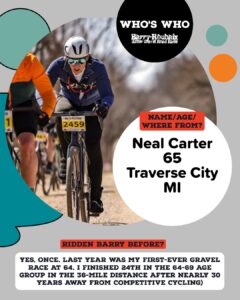
Last spring, the Barry-Roubaix staff featured me in a Who's Who post:
"After being diagnosed with oropharyngeal cancer last summer and finishing chemo radiation in early December, Neal registered for Barry-Roubaix as a symbol of his comeback. He started training on December 31 with one goal in mind: to finish. For Neal, this isn't about time or placing. It's about standing on that start line again and proving cancer doesn't get the last word."
The year before, I had lined up for my first gravel race at 64 — nearly 30 years away from competition — and finished 24th in my age group. Registering for 2026 was a declaration that the months of treatment hadn't taken the most important thing: the part of me that still wants to pin on a number.
And then, in the weeks before race day, I made a quiet decision that nobody outside my closest circle knew about until now.
I didn't ride.
The Quiet Decision
During training, I began experiencing episodes of premature ventricular contractions — PVCs, irregular heartbeats that can feel like a flutter or a thud in the chest. Their significance in my situation was unknown. My primary care physician suggested two plausible treatment-related causes: anemia from chemotherapy and radiation, or radiation effects on the thyroid. Neither had been confirmed or ruled out, and I wouldn't have answers until my cardiologist appointment in early May.
That uncertainty, combined with training that had been disrupted at a critical point in the build, made the decision straightforward: pushing through 36 miles of gravel with unresolved cardiac questions wasn't courage. It was recklessness with the gains that treatment had fought to give back.
The disappointment was real. This wasn't just a race — it was a symbol, a public commitment people had responded to with genuine warmth. But 40 years of endurance athletics teaches you the difference between mental toughness and self-destruction. I didn't ride. And I've made peace with it.
This summer, when my body says yes, I'll ride that course without a timing chip or a crowd. Just me, my bike, and 36 miles of gravel that will mean everything precisely because I waited.
There's always another start line waiting. I said that publicly. I mean it more now.
Why This Article Is Not Really About Gear
This is not a gear review. There is gear in it — I'll tell you what I bought, what it costs, how it connects, and what it tells me. And I'll be honest about what works and what doesn't, because that's the only kind of review worth writing.
But the technology is not the point. It's the tool in service of something larger: the responsible management of a body that went through something serious, and the discipline required to protect what that experience gave back. Cancer treatment changes your body in ways that take months to understand fully — muscle mass, bone density, cardiovascular capacity, and immune function. When treatment ends, the instinct is to rush back. To prove something.
The smarter path is to treat the comeback itself as the athletic event — to measure it, monitor it, and respect its timeline. That's what this article is really about.
Why Exercise Matters — Especially After Cancer
The monitoring system I've built isn't just about performance. In the most literal sense, it's about survival.
The research on exercise and cancer has moved well past preliminary. Regular physical activity meaningfully reduces the risk of developing several cancers, and — critically for someone in my situation — reduces the risk of recurrence after treatment. Exercise reduces chronic inflammation, improves insulin sensitivity, and helps regulate body composition, particularly visceral fat, which is metabolically active tissue that promotes the inflammatory signaling cancer exploits. Each of these is a meaningful reduction in the biological environment that allows cancer to establish and spread.
But the most compelling mechanism involves the immune system directly — specifically, a class of cells called Natural Killer cells, or NK cells. NK cells are the immune system's cancer surveillance unit: they patrol continuously, identifying and destroying abnormal cells before they can establish themselves. No prior exposure required. They are a first-line defense that operates independently of the adaptive immune system.
Here is where exercise becomes profoundly relevant: moderate aerobic exercise mobilizes NK cells into circulation and enhances their ability to find and destroy abnormal cells. Even a single workout produces a measurable spike in circulating NK cell count. Consistent training sustains elevated NK cell function over time.
This is why staying active — even at zone 1 and 2 intensities during a medically cautious period — is not just about maintaining fitness. It's immune surveillance. Every ride, every ski, every walk or hike, every paddle is a stimulus to a system actively protecting me from a recurrence I very much want to avoid. That reframe — from athletic recovery to immune health management — is what makes the monitoring system genuinely important rather than merely interesting.
The Coros Nomad — Why This Watch
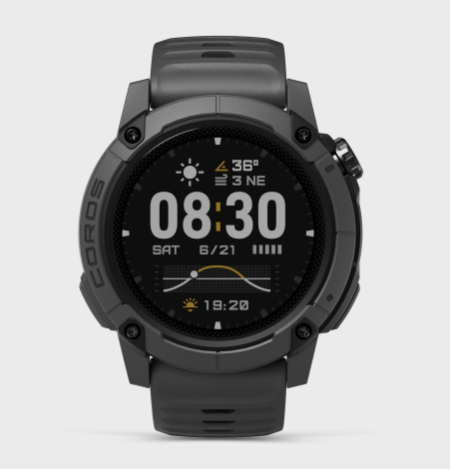
I'll say this briefly: I write honest reviews. When gear fails, I say so plainly. That matters here because when I tell you the Coros Nomad has been outstanding, it comes from the same voice that has called out poor design without hesitation. I switched to the Nomad after a frustrating experience with the Wahoo Elemnt Rival — a watch that couldn't be trusted for the kind of reliable heart rate and GPS data I needed during cancer recovery. I still use and recommend the Wahoo Elemnt Bolt as my cycling head unit. The Rival watch is a different story, and that experience sent me looking for something better.
A GPS sports watch is, at its core, a wrist-worn data collection platform. Done well, it captures heart rate, distance, sleep quality, and heart rate variability continuously — and routes that data to the apps and platforms where it becomes actionable. For someone managing a careful return to training, that continuous objective record is invaluable. It gives you something to make decisions from other than how you feel on a given morning, which, during cancer recovery, is an unreliable guide.
The Nomad won out over the more expensive Coros Apex 4 for a reason that surprised me: display readability. The Apex 4's sapphire glass — its premium feature — introduces a reflective tint that dims contrast in bright conditions. For sea kayaking on open Great Lakes water and mountain hiking in direct sun, that's a real problem. The Nomad's standard mineral glass outperforms it in glare. When display readability is your deciding factor, the less expensive watch wins.
Beyond that, the Nomad delivers everything the ecosystem requires: fast GPS acquisition, reliable optical heart rate, HRV and sleep tracking, and automatic sync to both TrainingPeaks and Strava after every workout. No manual intervention. No subscription. It simply works — and after the Rival experience, that reliability is not something I take for granted.
The Holter Monitor Chapter
Shortly after receiving the Nomad, my cardiologist fitted me with a 14-day Holter monitor to investigate the PVC episodes. The clinical monitor captured the cardiac picture; the Nomad provided the activity layer — heart rate during workouts and sleep data — that a medical device alone doesn't show.
I kept all workouts in zones 1 and 2, where optical wrist-based heart rate is most accurate and the data most reliable. The period confirmed what I needed to know: the cardiovascular system was holding up under easy aerobic load. Legs weak, engine clean. Objective data matters most when your medical situation is still unresolved, and perceived exertion can't be trusted.
The MorphoScan Nova arrived after the Holter period concluded — fortunate timing, since BIA technology is contraindicated with portable cardiac monitors.
Measuring What Treatment Changed — The Renpho MorphoScan Nova
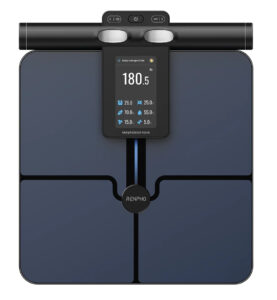
A GPS watch tells you what happened during a workout. A body composition scale tells you what's happening between workouts. For a 65-year-old returning from cancer treatment, that second layer is arguably more important than the first.
Standard bathroom scales measure one thing: total weight. That's not enough. Cancer treatment accelerates muscle loss while disrupting metabolic function, and body weight alone can't tell you whether you're losing fat or losing muscle — a critical distinction when rebuilding. The MorphoScan Nova uses eight-electrode bioelectrical impedance analysis to measure lean mass, visceral fat, body fat percentage, bone mass, and metabolic rate across five separate body segments. It's the difference between a number and a story.
The metrics it tracks — particularly lean mass and visceral fat — are the real recovery scorecard for an aging endurance athlete. Lean mass trending upward means the training stimulus is working. Visceral fat trending downward means the metabolic environment is improving. Those two trend lines, watched consistently over months alongside training load in TrainingPeaks, tell me more about how this comeback is actually progressing than any single workout ever could.
That data has also reinforced a training decision I've been working toward: making resistance training a year-round commitment rather than a seasonal one. In the past, I incorporated weights in the off-season as preparation for bike racing. At 65, post-treatment, that's no longer sufficient. Maintaining lean mass and bone density as an aging athlete requires consistent resistance stimulus throughout the year — not just in winter. The MorphoScan Nova gives me the data to hold myself accountable to that. If lean mass is slipping, I know I need to prioritize the weight room, not just log more miles.
One important distinction: the scale measures bone mass, not bone density. Clinical bone density requires a DEXA scan, which I have scheduled as soon as my oncologist clears me. The scale is a useful trend tool. It is not a medical device, and I treat it accordingly.
Building the Ecosystem
The individual devices are only as useful as the data they generate, and that data is only as useful as the system that consolidates it. Here's how the pieces connect — and why each link in the chain matters:
The Coros app is the hub for everything the Nomad captures. Its primary purpose is to receive, store, and display the watch's data — workouts, sleep, HRV trends, body battery — and to route that data to external platforms. It's also where Coros's EvoLab recovery and training load algorithms live. The reason this app matters for my purposes is that it synthesizes raw metrics into actionable guidance: recovery status, training load trends, and readiness scores that tell me whether I'm in a position to train harder or whether I need another easy day. Without the app, the watch is just numbers. The app is where the numbers become context.
The Coros Nomad syncs automatically to both TrainingPeaks and Strava after each workout. No manual intervention required. Heart rate, distance, time, sleep data, and — for the first time in my training history — HRV trends flow from the watch to the Coros app, and from there to the platforms where I review training load and recovery. I had no means of measuring HRV before the Nomad. That capability alone has changed how I understand my day-to-day recovery.
The Wahoo app serves the same consolidation function for Wahoo's hardware ecosystem — the Elemnt Bolt and the Kickr Core trainer. It receives workout data, syncs it to TrainingPeaks and Strava, and now — through the new two-way Wahoo/Coros integration — passes it across to the Coros ecosystem so that bike rides inform the Nomad's recovery calculations. The Wahoo app is not where I spend much time analytically; its job is to move data reliably to the platforms where analysis happens.
The Renpho Health app receives body composition data from the MorphoScan Nova via Bluetooth and stores it locally. Its purpose in my ecosystem is primarily as a transit hub — it holds the full 50+ metrics the scale captures and displays them with trend graphs, but its most important function is passing the core metrics onward to Fitbit, which then forwards them to Apple Health and ultimately to TrainingPeaks.
The Fitbit app plays an unexpected but essential role here despite the fact that I don't own a Fitbit device. Renpho Health syncs body composition data to the Fitbit platform, and Fitbit, in turn, has a well-established integration with Apple Health on iOS. This makes Fitbit the critical bridge in the chain — without it, there is no direct path from the Renpho scale to Apple Health. It's worth noting that my wife uses a Fitbit device and has her own account, which simplified this setup in our household. For anyone building a similar ecosystem on an iPhone, the Fitbit app is a free download, and the integration works exactly as described, even without a Fitbit wearable.
Apple Health serves as the central data repository on the iPhone, aggregating health and fitness data from multiple sources into a single on-device store. In my ecosystem, its role is specific: it receives body composition data forwarded from Fitbit — weight, BMI, and body fat percentage — and makes that data available to TrainingPeaks, which pulls from Apple Health on iOS. Apple Health doesn't analyze or display this data in a particularly useful way for training purposes, but it functions as a reliable and privacy-conscious data clearinghouse that allows otherwise incompatible platforms to share information. Think of it as the hub that makes the last leg of the Renpho-to-TrainingPeaks journey possible.
The Renpho MorphoScan Nova syncs to the Renpho Health app via Bluetooth. From there, the data moves to Fitbit, then to Apple Health, and from Apple Health into TrainingPeaks. It's a three-step bridge rather than a direct connection, but it works reliably. Body weight, BMI, and body fat percentage appear in TrainingPeaks alongside my workout data — which means I can see body composition trends in the same view as training load. That integrated picture is genuinely more useful than either dataset in isolation.
TrainingPeaks is the destination where everything converges — and the reason the entire data chain exists. It's a training analysis platform used by serious endurance athletes and coaches to track fitness, fatigue, and form over time. For my purposes, its most important function is the long-term view: a single place where I can see workout data from both the Nomad and the Wahoo Bolt, body composition trends from the scale, and the cumulative training load picture that tells me where I am in the recovery arc. The free tier covers everything I need—no subscription required.
Strava serves a different purpose — community and context rather than analysis. Seeing rides logged alongside others in my network, and occasionally hearing from someone who noticed I was out on the bike again, is its own form of accountability and encouragement. It's not a data analysis platform. It's a social layer on top of the training record, and it serves that purpose well.
The Wahoo Elemnt Bolt handles all bike ride data as it always has, syncing to Strava and TrainingPeaks through Wahoo's own integrations. And as of spring 2026, a development worth noting for anyone running a mixed Wahoo/Coros setup: Wahoo and Coros have deployed a two-way API integration that closes the data gap that previously existed between the two ecosystems. Completed workouts recorded on the Bolt now sync directly into the Coros app, where they populate into weekly distance totals and training load calculations. Likewise, workouts recorded on the Nomad appear in the Wahoo app. I tested the integration the day it launched using my Wahoo Kickr Core indoor trainer with the Wahoo SystemX virtual training app — the workout appeared in the Coros app exactly as described, with attribution noting it came from the Wahoo side. Outdoor rides are syncing as well.
No subscription fees are required for any of these devices. The Coros app, the Renpho Health app, and TrainingPeaks at the free tier all function fully without ongoing payments. In a category where subscription models are increasingly common, that matters.